Indonesia is one of the world’s most important sources of coconut oil, supplying crude coconut oil, refined coconut oil, copra, coconut fatty acid distillate, and related coconut-based products to international markets. Its combination of large coconut production, established processing capacity, export infrastructure, and proximity to major Asian markets makes it a strategic sourcing origin for food manufacturers, oleochemical producers, and industrial buyers.
For procurement teams, Indonesia offers more than access to raw material. The country has developed an integrated coconut value chain that includes coconut cultivation, copra processing, crushing, refining, fractionation, packaging, and export logistics. This allows buyers to source both commodity-grade crude oil and higher-value refined products from a single regional supply base.
Indonesia’s Position in the Global Coconut Oil Market
Indonesia is consistently ranked among the world’s leading coconut oil exporters. In 2024, Indonesia exported USD 2.79 billion of coconut oil, making it the world’s largest coconut-oil exporter by value according to trade data compiled by the Observatory of Economic Complexity.
Indonesia’s position is supported by its large domestic coconut industry. The United States Department of Agriculture estimates that Indonesia accounted for approximately 28% of global coconut oil production in the 2025/2026 marketing year, producing around 1.03 million metric tons of coconut oil and 1.62 million metric tons of copra.
The country is also a major exporter of crude coconut oil. Indonesia’s Ministry of Trade reported that crude coconut oil exports reached USD 385.66 million in 2024, an increase of 17.42% year on year. Between 2020 and 2024, the value of Indonesia’s crude coconut oil exports grew at an average annual rate of 7.61%.
Why Indonesia Is a Strategic Coconut Oil Origin
Indonesia’s strength in coconut oil comes from several interconnected advantages: raw-material availability, processing capacity, export experience, and a diversified customer base.
Large Coconut Production Base
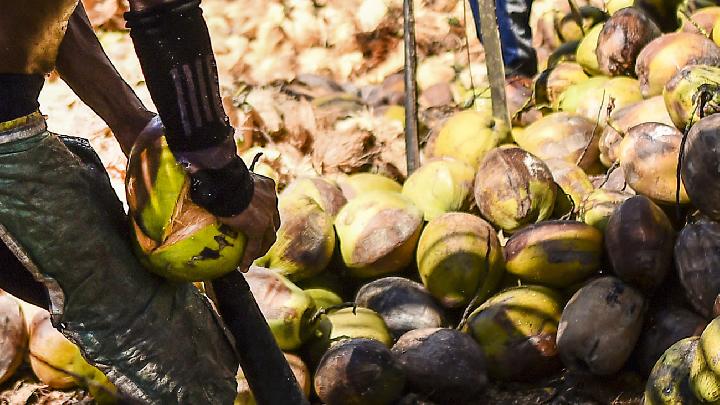
Indonesia has one of the world’s largest coconut-growing areas and production bases. Major producing provinces include Riau, East Java, North Sulawesi, Central Java, North Maluku, West Java, and Central Sulawesi.
Riau is a particularly important production centre. According to data cited in Indonesian supply-chain research, Riau produced 407.74 kilotons of coconut across 442,790 hectares in 2024, making it the country’s largest coconut-producing province.
This broad production base supports a steady supply of copra, fresh coconut, and coconut-based raw materials for domestic crushing and export-oriented processing.
Established Crushing and Refining Capacity
Indonesia’s coconut oil industry includes crushers, refiners, fractionation plants, specialty-fat producers, and exporters. Processing facilities are often located near coconut-producing regions, reducing transport time and supporting more efficient raw-material collection.
The USDA reports that Indonesian coconut oil processing facilities have production capacities ranging from 30 to 16,000 metric tons per month. This range reflects a mix of smaller crushers and large-scale refineries serving both domestic and export markets.
For buyers, this means Indonesia can supply a range of products, from crude coconut oil for further processing to RBD coconut oil and specialty fats for food, cosmetic, and industrial applications.
Export-Oriented Value Chain
Indonesia’s coconut industry is export-oriented and serves markets across Asia, Europe, the Americas, and the Middle East. In 2024, Indonesia’s main coconut-oil export destinations were China, the United States, the Netherlands, Brazil, and Malaysia.
The country’s export reach is broad. Industry research cited by Tempo reports that Indonesia exports coconut oil to more than 90 destination countries, reducing dependence on any single market and strengthening its position as a global supplier.
Indonesia’s Coconut Oil Export Performance
Indonesia’s coconut oil exports include both crude coconut oil and refined coconut oil. These products serve different buyer needs: crude oil is often used as a refining or oleochemical feedstock, while refined oil is used directly in food, cosmetics, and specialty applications.
Crude Coconut Oil Exports
Indonesia’s crude coconut oil exports have grown strongly in recent years. The Ministry of Trade reported export value of USD 385.66 million in 2024, up 17.42% from the previous year.
During January to May 2025, crude coconut oil exports reached USD 226.04 million, an increase of 57.00% compared with the same period in 2024. This reflects both stronger demand and improved export momentum in key markets.
The leading destinations for Indonesian crude coconut oil in that period were the Philippines, the Netherlands, and Malaysia. The Philippines accounted for 39.82% of export value, followed by the Netherlands at 33.14% and Malaysia at 20.81%.
Refined Coconut Oil Exports
Indonesia is also a significant exporter of refined coconut oil. The country ranked as the world’s second-largest exporter of coconut oil in 2025, with an estimated 22% global market share, according to industry research cited by Tempo.
Indonesia’s refined coconut oil exports serve food manufacturers, cosmetics companies, oleochemical producers, and industrial processors. The main markets include the Netherlands, China, the Philippines, Malaysia, and the United States.
Export Outlook
The USDA forecasts Indonesia’s coconut oil exports to increase to 650,000 metric tons in 2026/27, supported primarily by sustained demand from the global oleochemical industry.
This outlook is consistent with broader market expectations of improving coconut oil availability in 2026. As production recovers and export volumes increase, Indonesia is expected to remain a central supplier to global coconut oil buyers.
Major Export Markets for Indonesian Coconut Oil
Indonesia’s coconut oil exports are diversified across several regions and end-use industries.
| Market | Importance to Indonesian exporters | Typical buyer applications |
| China | Largest coconut-oil export destination by value in 2024 | Food processing, oleochemicals, personal care, industrial applications |
| United States | Major destination for refined and crude coconut oil | Food manufacturing, cosmetics, detergents, oleochemicals |
| Netherlands | Key European trading and processing hub | Re-export, food processing, oleochemicals, specialty fats |
| Brazil | Important South American market | Food processing, cosmetics, industrial applications |
| Malaysia | Major regional buyer and processing market | Oleochemicals, food processing, specialty fats |
| Philippines | Major regional market for crude coconut oil | Refining, oleochemicals, food processing |
The Netherlands is particularly important as a European trading and processing hub. Chinese demand is supported by food manufacturing and industrial processing, while the United States and Europe remain important markets for refined oils, specialty fats, and oleochemical feedstocks.
Indonesia’s Competitive Advantages
Indonesia’s role in the global coconut oil market is supported by structural advantages that go beyond production volume.
Raw-Material Access
Indonesia has a large coconut-growing base and a well-established copra supply chain. This gives crushers and refiners access to domestic raw material and reduces dependence on imported feedstock.
For buyers, access to local raw material can support more reliable supply planning, particularly when suppliers have established collection networks and processing facilities near production areas.
Integrated Processing Capability
Indonesian manufacturers can process coconut oil across multiple stages, including crushing, refining, bleaching, deodorising, fractionation, blending, and packaging. This enables the production of RBD coconut oil, crude coconut oil, coconut fatty acid distillate, vegetable fats, and specialty fats.
Integrated capability is valuable for buyers seeking customised specifications, consistent quality, and a broader portfolio of coconut-based and palm-based fat products.
Export Infrastructure and Experience
Indonesia’s export ecosystem includes ports, logistics providers, testing laboratories, certification bodies, and trading companies experienced in handling edible oils and fats. This supports the movement of coconut oil from production centres to international markets.
The country’s experience in exporting coconut oil to more than 90 destinations also provides buyers with access to suppliers familiar with international documentation, shipping requirements, and destination-market expectations.
Product Range Available From Indonesia
Indonesia supplies a broad range of coconut-based products for global buyers.
- Crude coconut oil: Used as a feedstock for refining, oleochemical processing, and industrial applications.
- RBD coconut oil: Refined, bleached, and deodorised oil used in food processing, cosmetics, and specialty applications.
- Coconut fatty acid distillate: Used in oleochemical manufacturing, soap production, surfactants, and fatty-acid derivatives.
- Copra and copra meal: Used in crushing, feed applications, and downstream processing.
- Vegetable fats and specialty fats: Used in margarine, shortening, confectionery, bakery, and industrial applications.
- Virgin coconut oil: Used in premium food, dietary supplements, personal care, and cosmetic applications.
This product diversity allows Indonesia to serve both commodity buyers and manufacturers seeking tailored ingredient solutions.
Quality, Compliance, and Buyer Requirements
Indonesian coconut oil suppliers can serve international markets, but buyers should still apply rigorous supplier qualification and specification controls. Quality requirements vary depending on whether the oil is intended for food, cosmetics, or industrial use.
Food-Grade Requirements
Food buyers should review free fatty acid, peroxide value, moisture, colour, odour, taste, contaminant limits, and food-safety certifications. RBD coconut oil should have a neutral sensory profile and consistent physical properties to support reliable manufacturing performance.
Codex Alimentarius provides useful reference limits for refined coconut oil, including a maximum acid value of 0.6 mg KOH/g and a maximum peroxide value of 10 meq active oxygen per kg.
Oleochemical Requirements
For oleochemical buyers, the fatty-acid profile is often more important than sensory characteristics. Lauric acid, myristic acid, caprylic acid, and capric acid content influence the performance of soap, surfactants, fatty alcohols, esters, and other derivatives.
Buyers should request detailed fatty-acid profiles and confirm whether the supplier can provide consistent raw-material quality over time.
Documentation and Traceability
International buyers should request a certificate of analysis, specification sheet, halal or kosher documentation where required, food-safety certifications, origin documentation, and export paperwork. Sustainability and traceability requirements are also becoming more important in European and North American markets.
Clear documentation reduces compliance risk and helps buyers demonstrate responsible sourcing to their own customers.
Opportunities for Indonesian Coconut Oil Suppliers
Indonesia has significant opportunities to expand its role in higher-value coconut oil markets.
Value-Added Exports
Indonesia can move beyond crude oil exports by expanding RBD coconut oil, fractionated coconut oil, specialty fats, and coconut-based oleochemical products. These products offer higher value and allow suppliers to serve more specific customer requirements.
The USDA expects Indonesian coconut oil exports to grow to 650,000 metric tons in 2026/27, supported by oleochemical demand. This indicates continued opportunities for suppliers that can deliver both volume and technical capability.
Premium and Sustainable Products
Demand for virgin coconut oil, organic coconut oil, and traceable coconut products is growing. The global virgin coconut oil market was valued at USD 1.0 billion in 2025 and is projected to reach USD 2.2 billion by 2033, growing at a 10.3% CAGR.
Indonesian suppliers that invest in quality assurance, traceability, and sustainable sourcing can capture opportunities in premium food, supplement, and cosmetic markets.
Expanded Market Penetration
Indonesia already exports coconut oil to more than 90 countries, but industry research identifies further opportunities in Europe and non-traditional markets. The Ministry of Trade also identifies significant untapped export potential in markets including Malaysia, the Netherlands, the United States, Italy, and Spain.
For buyers, this creates opportunities to develop long-term supply partnerships with Indonesian manufacturers that can support market-specific requirements and growing volumes.
Risks in Indonesia’s Coconut Oil Supply Chain
Despite its strengths, Indonesia’s coconut oil supply chain faces challenges that buyers should understand.
- Weather variability: Drought, excessive rainfall, storms, and disease can affect coconut yields and copra availability.
- Smallholder production: Coconut farming is often based on smallholder systems, which can create variability in raw-material quality and collection efficiency.
- Ageing coconut palms: Limited replanting and ageing trees can constrain long-term productivity.
- Price volatility: Supply disruptions and strong industrial demand can create sharp price movements.
- Quality variation: Differences in copra quality, storage conditions, and processing controls can affect free fatty acid, colour, moisture, and oxidation indicators.
- Logistics complexity: Export performance depends on port capacity, shipping availability, inland transport, and documentation efficiency.
Buyers can manage these risks by working with established suppliers, maintaining clear specifications, diversifying supply sources where appropriate, and building inventory strategies that reflect lead times and market volatility.
Indonesia’s Role in Sustainable Coconut Sourcing
Sustainability is becoming a key requirement in international coconut oil sourcing. Buyers increasingly expect information on raw-material origin, environmental practices, labour standards, farmer support, and quality-control systems.
Indonesia’s coconut sector has an opportunity to strengthen its position by improving traceability, supporting smallholder productivity, promoting responsible farming practices, and investing in processing efficiency. These efforts can help suppliers meet the expectations of food, cosmetic, and oleochemical customers in developed markets.
For manufacturers, sustainable sourcing is not only a compliance requirement. It can also improve supply reliability, strengthen farmer relationships, and support long-term access to quality raw materials.
What International Buyers Should Look For
When sourcing coconut oil from Indonesia, buyers should evaluate suppliers across several dimensions.
- Production capacity: Ability to supply the required volume consistently.
- Refining capability: Capacity to produce RBD coconut oil, specialty fats, and customised products.
- Quality control: Laboratory testing, batch traceability, and certificate-of-analysis availability.
- Raw-material network: Access to reliable copra and coconut supply.
- Export experience: Familiarity with international documentation and destination-market requirements.
- Certifications: Food safety, halal, kosher, organic, and sustainability documentation where applicable.
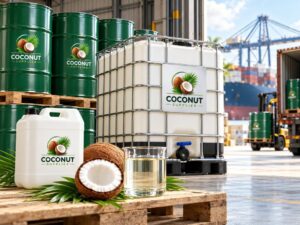
- Packaging flexibility: Drums, IBCs, flexitanks, ISO tanks, and retail-ready formats.
- Technical support: Ability to advise on oil selection, blending, melting profile, and application performance.
These factors help buyers identify suppliers that can deliver not only competitive pricing but also consistent quality and dependable service.
PT Bonanza Megah’s Role in Indonesia’s Coconut Oil Industry
PT Bonanza Megah is an established Indonesian coconut oil manufacturer with a history dating back to 1972. The company supplies RBD coconut oil, crude coconut oil, coconut fatty acid distillate, vegetable fats, and copra meal powder to food manufacturers, industrial customers, and distributors in international markets.
With more than five decades of experience, Bonanza Megah has developed expertise in coconut oil processing, refining, and specialty-fat production. Its product portfolio includes coconut-based oils and palm-based specialty fats for global food and industrial applications.
For international buyers, Bonanza Megah represents the type of established Indonesian supplier that can combine local raw-material access, processing capability, export experience, and technical support.
Frequently Asked Questions
Is Indonesia a major coconut oil producer?
Yes. Indonesia is one of the world’s leading coconut oil producers and exporters. The USDA estimates that Indonesia accounted for approximately 28% of global coconut oil production in the 2025/2026 marketing year.
What coconut oil products does Indonesia export?
Indonesia exports crude coconut oil, RBD coconut oil, coconut fatty acid distillate, copra, copra meal, vegetable fats, and specialty fats.
Which countries import coconut oil from Indonesia?
Major destinations include China, the United States, the Netherlands, Brazil, Malaysia, and the Philippines.
Why is Indonesia important for oleochemical buyers?
Indonesia supplies coconut oil and coconut-based derivatives that can be used to produce fatty acids, fatty alcohols, surfactants, detergents, and other oleochemical products.
What should buyers check when sourcing from Indonesia?
Buyers should review specifications, certificates of analysis, food-safety certifications, fatty-acid profiles, packaging options, export documentation, sustainability practices, and the supplier’s production capacity.
Is Indonesia suitable for bulk coconut oil supply?
Yes. Indonesia has large coconut production, established crushing and refining capacity, export infrastructure, and suppliers experienced in serving international markets.
Conclusion
Indonesia is a leading source of coconut oil for global markets because it combines large-scale coconut production with established processing, refining, and export capability. The country supplies crude coconut oil, RBD coconut oil, coconut fatty acid distillate, vegetable fats, and specialty fats to buyers across Asia, Europe, the Americas, and beyond.
For procurement managers, Indonesia offers a compelling combination of raw-material access, manufacturing capability, export readiness, and product diversity. As global demand for coconut oil continues to grow across food, cosmetics, detergents, and oleochemicals, Indonesia is expected to remain a strategic sourcing origin for reliable, high-quality coconut-based ingredients.
Looking for a reliable coconut oil manufacturer and supplier from Indonesia? Contact PT Bonanza Megah to discuss your product requirements and bulk supply inquiries.