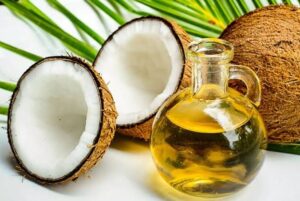
RBD coconut oil is refined, bleached, and deodorised coconut oil: a neutral, food-grade oil produced from crude coconut oil through a controlled refining process. It is widely used by food manufacturers, cosmetic formulators, and oleochemical producers because it offers consistent colour, low odour, predictable melting behaviour, and reliable technical performance.
Unlike virgin coconut oil, RBD coconut oil is not intended to retain a strong coconut aroma. Instead, it is refined to remove free fatty acids, pigments, volatile compounds, and other impurities that can affect flavour, appearance, stability, and downstream processing. For procurement teams, understanding the manufacturing route and specification sheet is essential when selecting a supplier for bulk supply.
What Is RBD Coconut Oil?
RBD stands for refined, bleached, and deodorised. The term describes the final stages of oil processing rather than a single refining method. RBD coconut oil is commonly produced from copra-derived crude coconut oil, which is then refined to create a clear, pale, neutral-tasting finished oil.
The oil is classified as a lauric oil because lauric acid (C12:0) is its dominant fatty acid. According to Codex Alimentarius ranges, coconut oil typically contains 45.1–53.2% lauric acid, 16.8–21.0% myristic acid, and 4.6–10.0% caprylic acid.
RBD coconut oil is generally solid or semi-solid below approximately 23–25°C and becomes a clear liquid as temperatures rise. This melting profile is valuable in bakery, confectionery, margarine, coatings, and other food systems where controlled texture and mouthfeel are important.
RBD Coconut Oil Manufacturing Process
The production of RBD coconut oil typically begins with copra, the dried kernel of mature coconuts. Copra is cleaned, milled, cooked, and mechanically pressed to extract crude coconut oil. The crude oil is then refined through several stages to meet food-grade and industrial requirements.openknowledge.
Copra Preparation and Oil Extraction
Coconut kernels are dried into copra, which reduces moisture and prepares the raw material for oil extraction. The copra is cleaned, milled, and conditioned before mechanical pressing using screw presses, expellers, or similar extraction equipment.openknowledge.fao+2
The extracted crude coconut oil is filtered to remove larger solids and foots. At this stage, the oil may contain free fatty acids, moisture, pigments, phospholipids, oxidation products, and other impurities that must be reduced before it can be used as a refined food oil.openknowledge.
Degumming and Neutralisation
Degumming removes gums, phospholipids, and other hydratable impurities that can cause sedimentation or interfere with refining. Water, steam, or acid treatment may be used depending on the refinery’s process design and crude-oil quality.
Neutralisation reduces free fatty acids, which are a key quality indicator in edible oils. Free fatty acids can contribute to undesirable flavour, reduce oxidative stability, and affect the performance of the oil in food and cosmetic formulations.
Bleaching
Bleaching uses adsorbents, commonly bleaching earth and sometimes activated carbon, to reduce colour bodies, residual impurities, and oxidation-related compounds. The oil is heated and mixed with the adsorbent before filtration removes the spent material.openknowledge.
The objective is not to alter the fundamental fatty-acid composition of the oil. Rather, bleaching improves visual clarity and colour consistency, which is particularly important for food products, white or light-coloured cosmetics, and specialty-fat applications.
Deodorisation
Deodorisation is the final major refining stage. The oil is heated under vacuum, often with steam injection, to remove volatile compounds, residual free fatty acids, aldehydes, ketones, and odoriferous substances.openknowledge.
This step produces the neutral odour and taste associated with RBD coconut oil. It also supports oxidative stability by reducing compounds that can accelerate flavour deterioration during storage.openknowledge.
Filtration, Cooling, and Packaging
After deodorisation, the oil is cooled, polished-filtered, and transferred to storage or packaging. Filtration removes fine particles and ensures a clean, clear finished product.openknowledge.
For export supply, RBD coconut oil may be packed in drums, IBCs, flexitanks, ISO tanks, or retail-ready packaging, depending on the buyer’s volume, handling infrastructure, and regulatory requirements. Temperature control is important because coconut oil can solidify in cooler climates.
RBD Coconut Oil Specifications
A strong RBD coconut oil specification should define both the physical appearance of the oil and the analytical limits that determine its suitability for the buyer’s application. While individual buyers may set tighter internal limits, the following parameters are commonly reviewed.
| Parameter | Typical buyer requirement | Why it matters |
| Free fatty acid, as lauric acid | 0.05–0.10% maximum | Indicates refining performance and hydrolytic quality |
| Peroxide value | 0.5–1.0 meq/kg maximum | Measures early oxidation and supports shelf-life control |
| Moisture and volatile matter | 0.05–0.10% maximum | Reduces risk of hydrolysis and processing issues |
| Colour | Light, clear, and consistent | Important for food and cosmetic appearance |
| Odour and taste | Neutral | Enables use in fragrance-led and flavour-sensitive products |
| Insoluble impurities | 0.05% maximum | Indicates filtration and cleanliness |
| Fatty-acid profile | Lauric acid dominant | Determines saponification, melting, and derivative performance |
| Contaminants | According to destination-market regulation | Required for food and cosmetic compliance |
Codex Alimentarius sets a maximum acid value of 0.6 mg KOH/g oil and a maximum peroxide value of 10 milliequivalents of active oxygen per kg for refined oils. Commercial premium RBD coconut oil specifications are often tighter, with free fatty acid around 0.05–0.10% maximum and peroxide value around 0.5–1.0 meq/kg maximum.
Free Fatty Acid and Acid Value
Free fatty acid is one of the most important indicators of RBD coconut oil quality. It reflects the degree to which triglycerides have been hydrolysed into free fatty acids and glycerol. Lower values generally indicate better refining and better control of raw-material quality.
For RBD coconut oil, free fatty acid is commonly expressed as lauric acid. Buyers should confirm whether the supplier reports FFA as lauric acid, acid value in mg KOH/g, or both, because the units are related but not identical.
Peroxide Value and Oxidative Stability
Peroxide value measures primary oxidation products. A low peroxide value is important for products with long shelf life, light colour, delicate flavour, or premium cosmetic positioning.
Buyers should also consider induction period, storage temperature, packaging, and headspace oxygen. A low peroxide value at release does not guarantee stability if the oil is exposed to heat, oxygen, light, or contamination during transport and storage.
Colour, Odour, and Appearance
RBD coconut oil should be clear and light in colour, with a neutral odour and taste. These sensory characteristics are central to its value in products where coconut flavour would interfere with the intended profile.
For cosmetics, colour consistency is especially important in creams, lotions, hair-care products, and transparent formulations. For food manufacturing, neutral sensory characteristics support consistent flavour delivery across production batches.
Fatty-Acid Profile
The fatty-acid profile determines how RBD coconut oil behaves in the finished application. Lauric acid supports soap hardness and lather, while caprylic and capric acids are relevant to medium-chain triglyceride derivatives and specialty applications.fao+2
Buyers should request a certificate of analysis that includes the fatty-acid profile, particularly for applications involving soap, surfactants, fatty alcohols, confectionery fats, or nutritional products.
Food and Beverage Applications
RBD coconut oil is used extensively in food manufacturing because it combines a neutral sensory profile with useful functional properties.
Bakery and Confectionery
In bakery products, RBD coconut oil can contribute structure, richness, and a clean mouthfeel. It is used in biscuits, cookies, cakes, fillings, coatings, and spray oils for crackers and baked snacks.
In confectionery, its melting behaviour and solidification profile make it useful in coatings, fillings, and selected chocolate-type applications. Hydrogenated or fractionated coconut oil may be used where a firmer texture or higher melting point is required.
Margarine, Shortening, and Specialty Fats
RBD coconut oil can be used as a component in margarine, shortening, and specialty-fat systems. Its saturated fatty-acid profile supports firmness and structural stability, while fractionation allows manufacturers to tailor melting behaviour for specific products.
For buyers developing plant-based or butter-replacement products, coconut oil is often evaluated alongside palm-based and other vegetable fats. The correct choice depends on melting profile, crystallisation behaviour, nutrition targets, cost, and regulatory requirements.
Dairy Alternatives and Filled Products
RBD coconut oil is used in ice cream, filled milk, filled cheese, and other dairy-alternative applications. It can provide fat content, texture, and mouthfeel while offering a neutral base that does not dominate the final flavour.
In these applications, buyers should assess melting behaviour, crystallisation, oxidative stability, and interaction with emulsifiers and other fats in the formulation.
Cosmetic and Personal-Care Applications
RBD coconut oil is a practical base oil for cosmetics and personal-care products because it is neutral in odour and colour. It is used in lotions, creams, moisturisers, hair conditioners, shampoos, and other formulations where a clean sensory base is required.eeas.europa+1
The oil functions as an emollient and can help soften and condition skin and hair. Its saturated fatty-acid composition also makes it a useful ingredient in soap and cleansing formulations.
For cosmetic buyers, RBD coconut oil is often preferred over virgin coconut oil when fragrance, colour, or active-ingredient delivery must remain consistent. Virgin coconut oil may be more appropriate for products positioned around a natural coconut aroma.
Industrial and Oleochemical Applications
RBD coconut oil is also an important raw material in industrial and oleochemical supply chains.
Soap and Detergent Manufacturing
Coconut oil is valued in soap production because its lauric and myristic acid content supports hardness, cleansing performance, and lather. RBD coconut oil can be used directly in some soap systems, while crude coconut oil or coconut fatty acid distillate may be preferred where further processing is part of the manufacturer’s operation.
Coconut-derived fatty acids and alcohols are also used to produce surfactants, detergents, shampoos, and biodegradable cleaning products.
Fatty Alcohols and Derivatives
RBD coconut oil can be used as a feedstock for fatty-acid splitting and downstream oleochemical derivatives. These derivatives include fatty alcohols, methyl esters, esters, and other ingredients used in detergents, personal care, lubricants, plastics, and resins.
For oleochemical buyers, the fatty-acid distribution is more important than sensory characteristics. Consistent lauric, myristic, caprylic, and capric acid levels help maintain predictable reaction performance and product quality.
RBD Coconut Oil Versus Virgin Coconut Oil
| Attribute | RBD coconut oil | Virgin coconut oil |
| Raw material | Usually copra-derived crude coconut oil | Fresh mature coconut kernel |
| Processing | Refined, bleached, and deodorised | Mechanical or natural processing without chemical refining |
| Sensory profile | Neutral colour, odour, and taste | Natural coconut aroma and flavour |
| Typical food use | Bakery, confectionery, margarine, frying, processed foods | Premium culinary, supplements, natural food products |
| Cosmetic use | Neutral base for fragrance-led products | Natural or coconut-forward positioning |
| Consistency | High batch-to-batch consistency | May vary more with raw material and process conditions |
| Best for | Large-scale manufacturing requiring neutrality | Premium products where coconut character is desired |
RBD coconut oil is generally the more practical choice for high-volume food manufacturing and industrial applications because refining delivers a consistent, neutral input. Virgin coconut oil is selected when the natural coconut profile is a product differentiator.
What Buyers Should Request From Suppliers
Before placing a bulk order, buyers should obtain a complete technical package from the supplier. This should include more than a basic certificate of analysis.
Recommended documents and information include:
- Product specification sheet: Grade, appearance, fatty-acid profile, physical constants, and analytical limits.
- Certificate of analysis: Batch-specific FFA, peroxide value, moisture, colour, and other agreed parameters.
- Process description: Confirmation that the oil has been refined, bleached, and deodorised.
- Food-safety and quality certifications: Relevant to the destination market and customer requirements.
- Halal, kosher, or organic documentation: Where applicable to the buyer’s product and market.
- Allergen, GMO, and contaminant declarations: As required by the buyer’s regulatory and customer standards.
- Packaging specification: Drum, IBC, flexitank, ISO tank, or retail-ready format.
- Storage and transport guidance: Temperature conditions, handling requirements, and shelf-life recommendations.
- Export documentation: Commercial invoice, packing list, certificate of origin, phytosanitary documentation where applicable, and shipping documents.
Clear specifications reduce the risk of quality disputes and help ensure that the oil performs consistently in the buyer’s manufacturing process.
Indonesia’s Role in RBD Coconut Oil Supply
Indonesia is a major global source of coconut raw materials and coconut-based oils. Its supply chain includes coconut cultivation, copra processing, crushing, refining, fractionation, packaging, and export logistics.
PT Bonanza Megah is an established Indonesian coconut oil manufacturer with a history dating back to 1972. The company supplies RBD coconut oil, crude coconut oil, coconut fatty acid distillate, vegetable fats, and copra meal powder to food manufacturers, industrial customers, and distributors in international markets.
For buyers seeking RBD coconut oil, an established Indonesian manufacturer can offer advantages in raw-material access, refining capability, export documentation, and customised supply arrangements. Bonanza Megah’s product portfolio includes coconut-based oils and palm-based specialty fats for global food and industrial applications.
Frequently Asked Questions
What does RBD mean in coconut oil?
RBD means refined, bleached, and deodorised. It describes a coconut oil that has been processed to remove impurities, colour, free fatty acids, and odour-causing compounds, resulting in a neutral and consistent oil.
Is RBD coconut oil suitable for food use?
Yes. RBD coconut oil is widely used in food manufacturing, including bakery, confectionery, margarine, shortening, frying, ice cream, and filled dairy applications. Its neutral taste makes it suitable where coconut flavour is not desired.
What is the difference between RBD coconut oil and virgin coconut oil?
RBD coconut oil is refined, bleached, and deodorised, while virgin coconut oil is produced from fresh coconut kernel without chemical refining, bleaching, or deodorising. RBD oil is neutral in aroma and taste; virgin coconut oil retains a natural coconut character.eeas.
What specifications should buyers check for RBD coconut oil?
Buyers should review free fatty acid, peroxide value, moisture, colour, odour, taste, insoluble impurities, fatty-acid profile, contaminant limits, packaging, and applicable certifications. The exact limits should match the intended food, cosmetic, or industrial application.
Can RBD coconut oil be used in cosmetics?
Yes. RBD coconut oil is used as an emollient and base oil in lotions, creams, moisturisers, shampoos, conditioners, and hair-care products. Its neutral odour and colour make it suitable for fragrance-led and colour-sensitive formulations.
Is RBD coconut oil the same as hydrogenated coconut oil?
No. RBD coconut oil has been refined, bleached, and deodorised but is not necessarily hydrogenated. Hydrogenated coconut oil has undergone hydrogenation to increase melting point and firmness, making it more suitable for certain shortening, margarine, and confectionery applications.openknowledge.
Conclusion
RBD coconut oil is a refined, bleached, and deodorised coconut oil designed for applications that require consistency, neutral sensory characteristics, and dependable technical performance. Its manufacturing process removes impurities and volatile compounds, producing a clear oil suitable for bakery, confectionery, margarine, dairy alternatives, cosmetics, soap, and oleochemical applications.
For international buyers, the most important purchasing decisions are based on more than price. A reliable supplier should provide transparent specifications, batch-level analytical data, consistent fatty-acid profiles, appropriate certifications, and dependable export logistics.
Looking for a reliable coconut oil manufacturer and supplier from Indonesia? Contact PT Bonanza Megah to discuss your product requirements and bulk supply inquiries.